
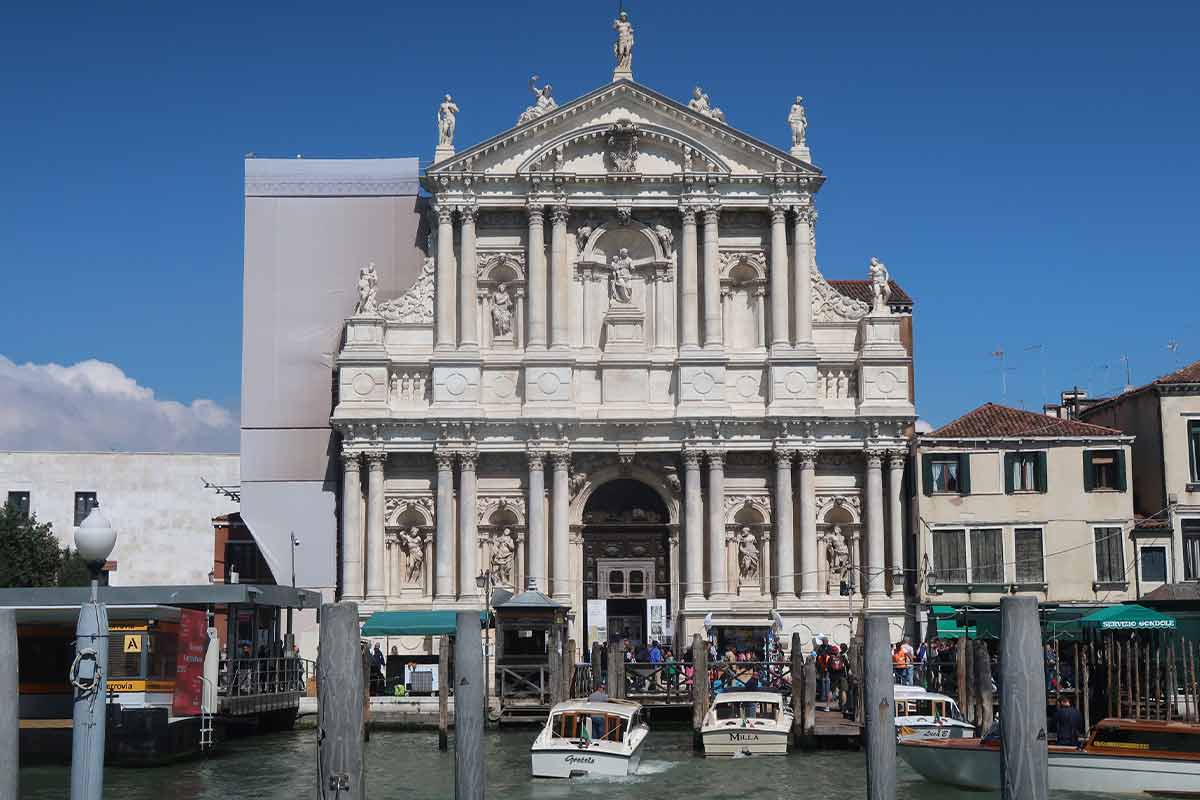
Venice is one of the most unusual cities in the world, built on more than one hundred small islands and shaped by water, trade, and political independence.
Its history stretches back more than 1,500 years and explains why the city still feels so different today.
This short guide walks you through the key moments that formed Venice, from its origins in the marshes to the rise of the Republic of La Serenissima.
A brief history of Venice
If you’re new around here, my name is Maddy and I’m from Castelfranco. I offer trip consultations and AMA calls where you can ask me your questions about Venice.
Let’s now start this brief history lesson with…
1. Origins: refuge in the marshes (5th–6th Century AD)
In the 5th century AD, people living on the mainland fled repeated invasions by the Ostrogoths and Lombards. To escape, they took refuge in the marshes and shallow waters at the edge of the Po River delta — an area difficult for armies to reach.
This protected location allowed small communities to survive without being conquered. At this stage, Venice didn’t look like a city at all. It was simply a scattered group of settlements living under the influence of the Byzantine Empire.
2. From communities to a Duchy (584 AD)
In 584 AD, the settlements in the lagoon were organised into a duchy and became part of the Byzantine-controlled Exarchate of Ravenna. This connection shaped early Venetian politics, religion, and trade.
The first doge, Paoluccio Anafesto, was elected in 697 AD. He represented both the local population and the city’s link to Byzantium.
3. Growing independence from Byzantium
Over time, political struggles and internal divisions pushed Venice to seek more autonomy. Through several uprisings and negotiations, the lagoon communities gradually separated themselves from Byzantine control.
By the early Middle Ages, Venice had become an independent political entity, free to run its own affairs. This independence is one of the foundations of Venice’s later success.
4. The Rise of trade and wealth
From its earliest days, Venice was a trading powerhouse. Its position between Europe and the Eastern Mediterranean made it a natural hub for goods, ideas, and people.
Trade brought enormous wealth to the city and funded many of the famous attractions we still see today — from grand churches to ornate palaces. The canals played a central role, acting as highways for goods and encouraging the city to expand onto new islands and build more space for merchants.
A new leading class emerged, made up of wealthy families who earned fortunes through trade with the Mediterranean, the Middle East, and the Far East.
5. The Birth of “La Serenissima”
The success of this merchant-led society gave rise to the Venetian Republic, known as La Serenissima. Venice operated almost like a small nation, with its own laws, currency, diplomatic networks, and a complex political system centred around the doge and the Great Council.
For centuries, La Serenissima was a major maritime power. Its navy protected trade routes, while its merchants controlled goods flowing across Europe.
A brief history of Venice
Venice began as a place of refuge, slowly grew into an independent trading hub, and eventually became one of the most influential maritime republics in history.
Its unusual geography and clever political leadership shaped a society built on commerce, diplomacy, and innovation.
Understanding this history helps explain why Venice looks and feels the way it does today — a city born from water, protected by its lagoon, and shaped by people determined to survive and thrive.
📌 Like this guide? Tap to Pin it…
If you found this Venice travel guide helpful, feel free to buy me a virtual coffee here.
“Dear traveller! Some links in this post contain affiliate links. Meaning, if you click through and make a tour booking or reserve a hotel, I may earn a small commission at no additional cost to you. Your support means a lot to me and helps me to keep creating and maintaining the quality of this site for you.”


