
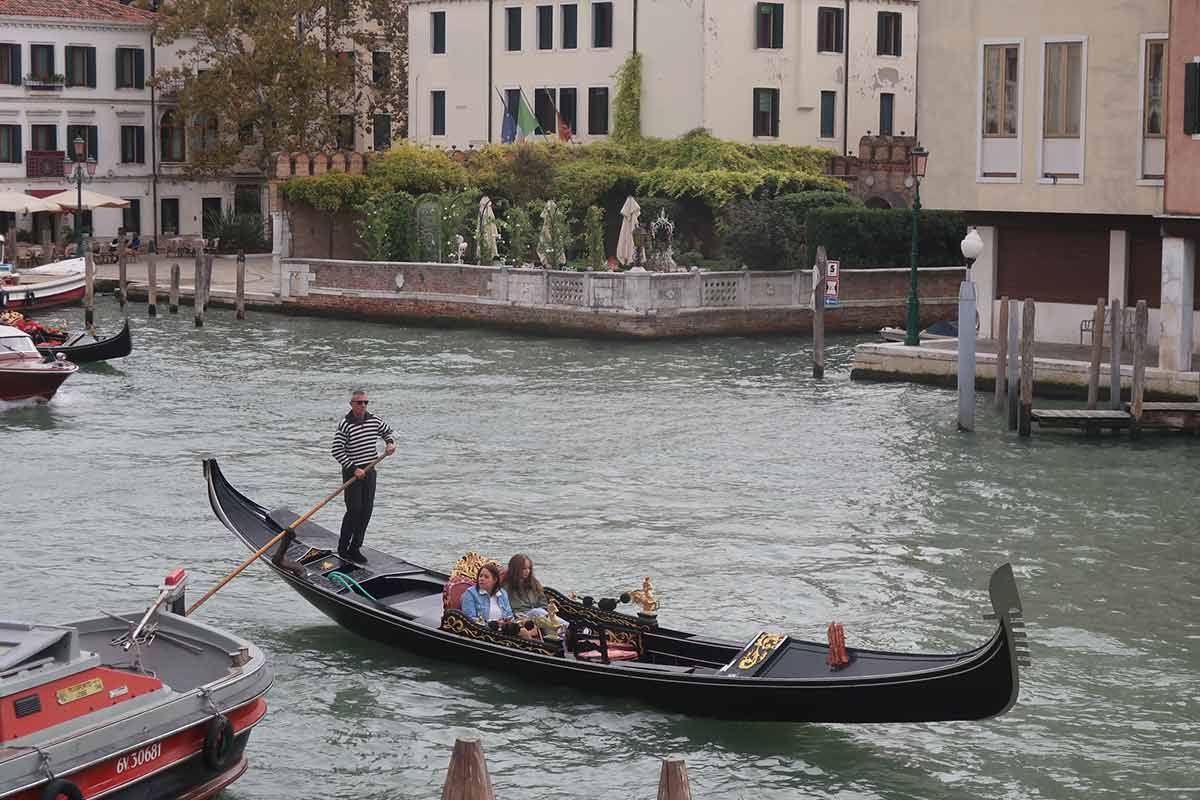
If you’ve ever looked down into one of Venice’s green canals and wondered how deep it really is, you’re not alone.
This is one of the most common questions travellers have, especially when they first see gondolas, water taxis and delivery boats passing so close to the buildings.
Despite how mysterious the water looks, Venice’s canals are not very deep, and their depths change depending on the tide and the type of canal.

How deep are Venice’s canals
If you’re new around here, my name is Maddy and I’m from Castelfranco. I offer trip consultations and AMA calls where you can ask me your questions about Venice.

Below you’ll find clear answers based on real data about the Grand Canal, smaller canals, and one of the deepest waterways in the city: the Giudecca Canal.
How deep are Venice’s canals on average?
Depth in Venice varies from canal to canal, but a typical neighbourhood canal is around 1.5 to 2 metres deep. These numbers can shift slightly throughout the day because Venice sits inside a tidal lagoon.
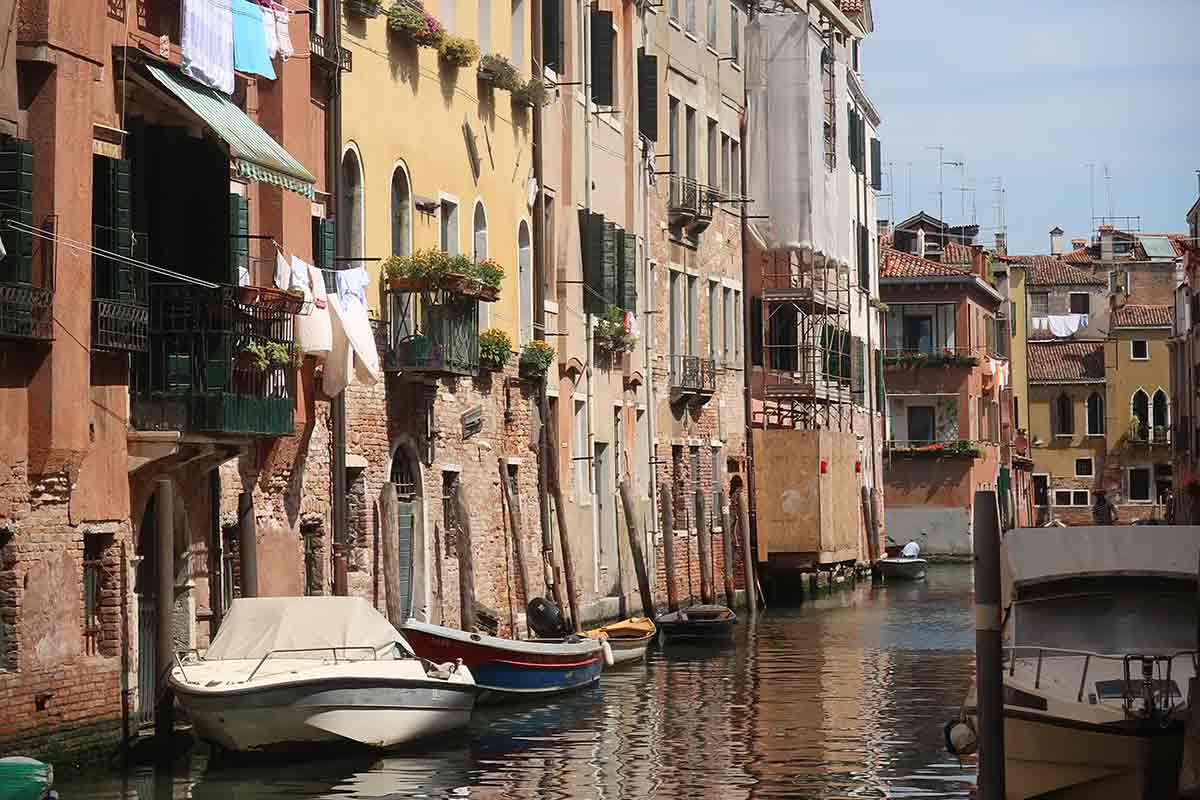
During low tide, some canals become noticeably shallower, and during high tide, they appear deeper, but the canal floor doesn’t actually change.
Here’s my guide on acqua alta in Venice and how to get ready for it.
Here’s a quick overview of average depths:
- Smaller residential canals: approx. 1–1.5 metres
- Commonly used canals: around 2 metres
- Larger secondary canals: 2–3 metres
This depth is enough for gondolas, small boats, and service vessels to pass without problems. Venice’s historic structure was built with these shallow waterways in mind, and it’s one of the reasons the city relies so heavily on flat-bottomed boats.
How deep is the Grand Canal?
The Grand Canal: is the main waterway of the city, and it’s significantly deeper than the average canal. On average, it reaches around 5 metres.
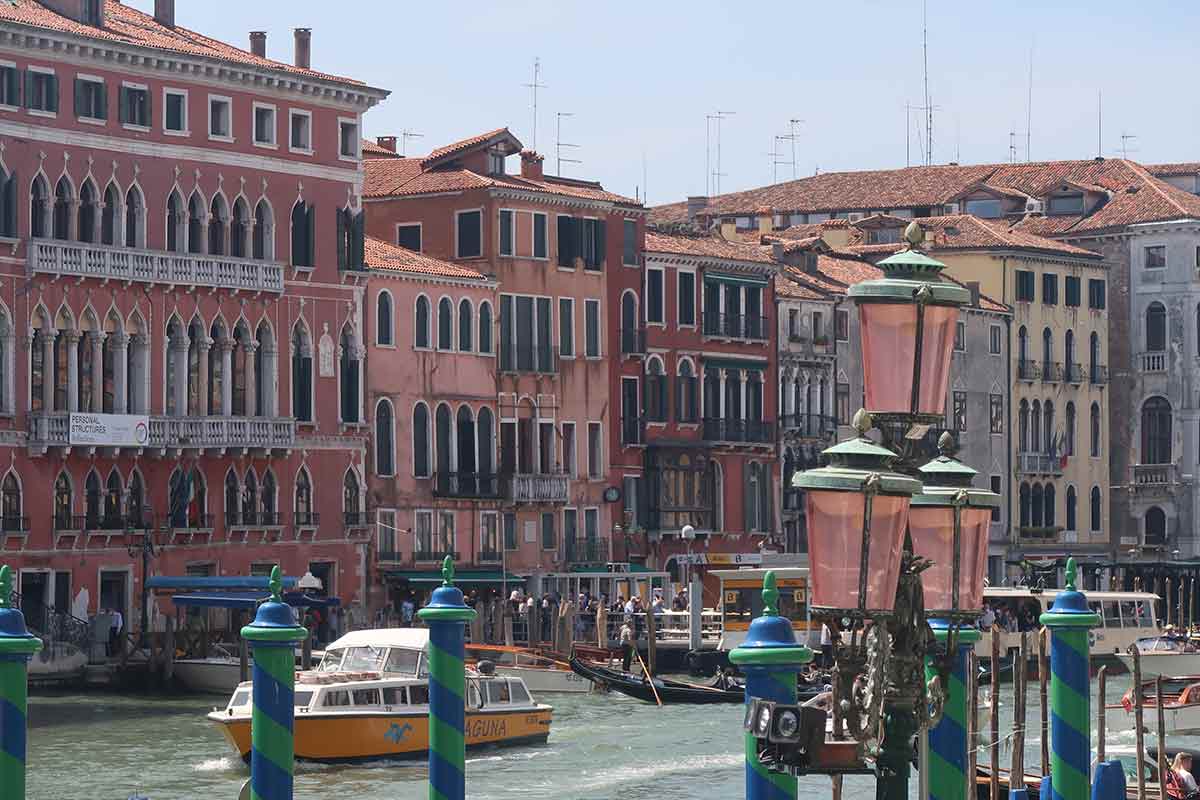
This depth is essential because the Grand Canal is used by vaporetti, water taxis, ambulances, police boats, delivery boats, and larger commercial vessels that need more space to navigate safely.
How deep is the Giudecca Canal?
The Giudecca Canal: which separates Venice from the island of Giudecca, is one of the deepest and widest parts of the city’s water system. Its depth can vary significantly, with a minimum of around 4 metres and a maximum of around 14 metres.
These deeper waters were historically important for larger ships and industrial traffic moving between the lagoon and the open sea. Even today, its size and depth make it one of the most navigated channels outside the Grand Canal.
Do Venice’s canals ever become too shallow to navigate?
Venice’s canals remain navigable year-round, except in rare cases when an extremely low tide exposes the mud and reduces water levels to a minimum. This usually happens in winter and lasts a short time.
Even then, major canals such as the Grand Canal and the Giudecca Canal remain usable, while a few smaller canals might become temporarily inaccessible.
That’s why if you are planning to use the water taxi service, be aware that in rare occasions won’t be available. But no worries, the company will keep you on the loop and alternative water transport options are available too.
How are the canals cleaned and maintained?
Maintaining Venice’s canals is essential not only for navigation, but also for protecting the lagoon’s health and the entire water system surrounding the city.

Sediment naturally settles at the bottom due to the constant movement of mud caused by the ebb and flow of the tides.
To prevent canals from slowly filling up, Venice carries out regular dredging, which removes accumulated sludge. This practice has existed since the time of the Serenissima Republic, when canals were drained roughly once every ten years to remove mud and waste.
Today the methods are more modern, but the purpose is exactly the same: keeping canals open, safe, and stable. Without this maintenance, boat traffic would slow down, the lagoon’s water quality would suffer, and the foundations of buildings would be at risk.
Venice’s canal depth: key takeaways
Venice’s canals are far shallower than most people imagine. Smaller canals are usually between 1.5 and 2 metres deep, the Grand Canal reaches about 5 metres, and the Giudecca Canal ranges from 4 to 14 metres.
These depths shift with the tides, but remain stable thanks to regular maintenance and centuries-old lagoon management.
Understanding these numbers helps make sense of how Venice operates and why its traditional boats are designed the way they are.
The entire city depends on these waterways, and keeping them healthy is one of Venice’s most important responsibilities.

If you found this Venice travel guide helpful, feel free to buy me a virtual coffee here.
“Dear traveller! Some links in this post contain affiliate links. Meaning, if you click through and make a tour booking or reserve a hotel, I may earn a small commission at no additional cost to you. Your support means a lot to me and helps me to keep creating and maintaining the quality of this site for you.”


